| Crete is a very large island with much to see and this page will give you an overview so you can decide which parts you want to visit. There is a short description of towns, beaches, archaeological sites and different areas of Crete, with links for more detailed information. |
|
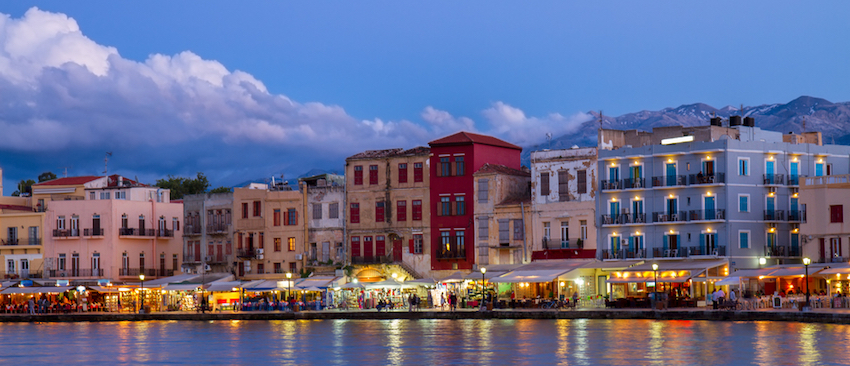
Chania
|
Chania and Western Crete
Though Chania is a
modern city the interior is a labyrinth
of old Venetian houses that you can wander
around with only an occasional reminder of the
twentieth century. The port is actually in
Souda Bay, but there are buses and taxis
available to take you right into the city. The
bus will leave you at the market place
near the old town. There are hotels all over
the city but the ones overlooking the old harbor
are probably where you want to be even if the
nightlife below can get a little noisy. If you
don't see yourself as being one of the people
making the noise then you may want to find a
quieter place further back or ask your travel
agent what she suggests. For families with young children I recommend the Hotel Ammos on the beach, just 4 kilometers outside of town.
You can actually walk into Chania in 45 minutes going from beach to beach (the owner Nikos does this every day for exercise) or see my Chania Hotels page.
As for what to do
in Chania it's a case of passing the day until
the sun goes down and the lights of the cafes,
restaurants and bars around the harbor come on
and life begins. Like most harbor towns the
expensive cafes have taken the best spots on
the waterfront and the cheaper and more
traditional restaurants are on the fringes and
the back streets. There are also some
interesting non-traditional restaurants
scattered around the old town which you will
come across in your wanderings. Most of the
bars, discos and nightclubs are located in the
inner harbor. For traditional Greek music in a
traditional Greek setting try the Café Kriti
at 22 Kalergon, the next street up parallel to
the inner harbor. See Chania Restaurants.
|
|
Balos
|
|
The beaches are to
the west and being close to the city
they are usually if not crowded, well
populated. Anyway, for adventurous travelers
to be in Crete without a car is like being in
Manhattan without a wallet. Your days should
be spent exploring the island. If you came to
lay out on the beach and watch people you
should be at Elounda beach or Ag
Nik. For some excursions in Chania and around western Crete read Nikos Tsepetis Chania Crete Excursions which includes secluded beaches, traditional villages, spectacular gorges and places to visit and to avoid.
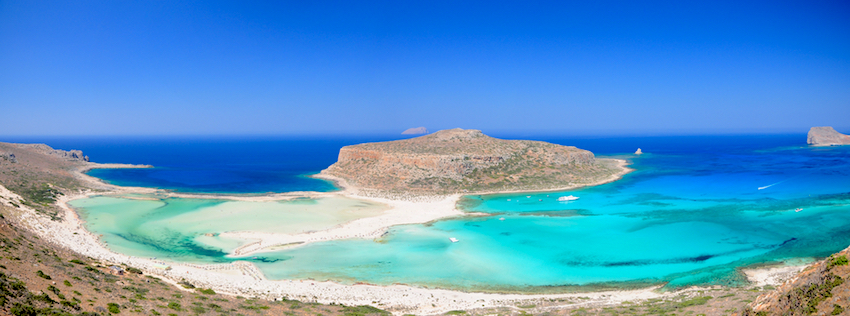
The best and most spectacular beaches are west of Chania, as far west as you can go to Balos, Falasarna and Elafonissi. See my Chania Beaches page. You can search Chania Hotels and use the maps to find hotels, rooms and villas on any of these beaches. I have an entire website devoted to Chania and West Crete. See Matt's Chania Guide
|
|
Rethymnon
|
|
Rethymnon
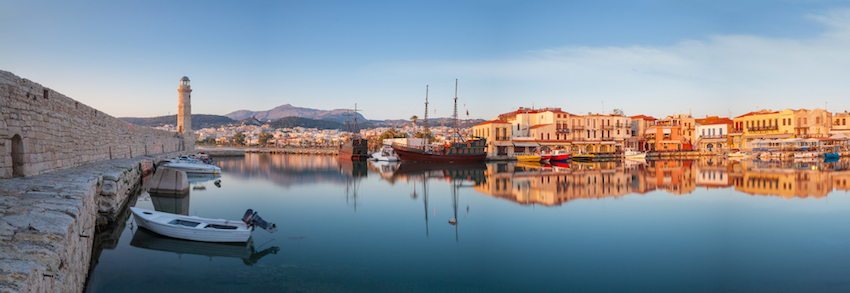
Another option is the city of Rethymnon
which is a
modern city of 4 story apartment buildings and hotels stretched along a long sandy beach. There is a traditional inner harbor of
Venetian buildings, similar to the harbor in Chania, with cafes and fish tavernas below an impressive Venetian castle called the Fortezza. Most of the tourist activity and
nightlife is located on the road behind the
town beach, but some of the best beaches on
the island are a short distance away to the
west where development is not as advanced as
it is toward Heraklion. There are long
stretches of sand and you may find yourself
alone, but be aware that there can be strong
currents and there are no lifeguards.If you are in Greece in the off-season, particularly during Apokreas, Greece's Carnival season, Rethymnon is one of the best the best places to be. Search Hotels in Rethymnon.
See Diane Farr Louis' Guide to Rethymno
|
 |
|
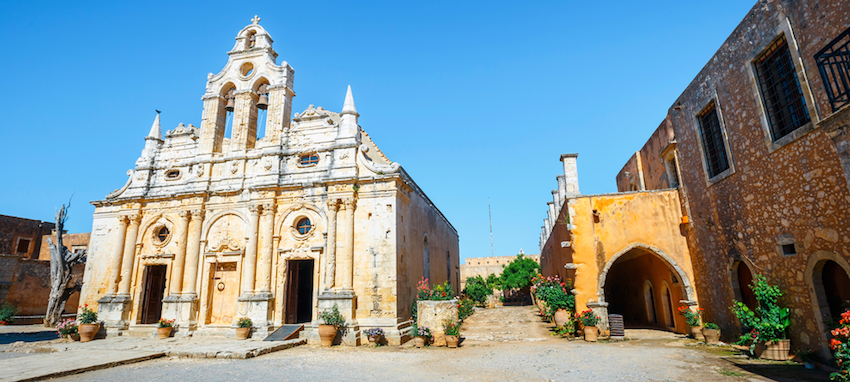
The
Arkadiou
Monastery
between Rethymnon
and Iraklion is a 5th century holy site that
became a symbol of Cretan resistance on
November 9th 1866 when hundreds of refugees
and revolutionaries chose death over surrender
to the Turks and blew themselves to pieces
with the gunpowder that was being stored there
by the Cretan Revolutionaries. The monastery
was rebuilt again and is well worth the
visit.
|
The Samaria
Gorge and Southwestern Crete
|
 |
|
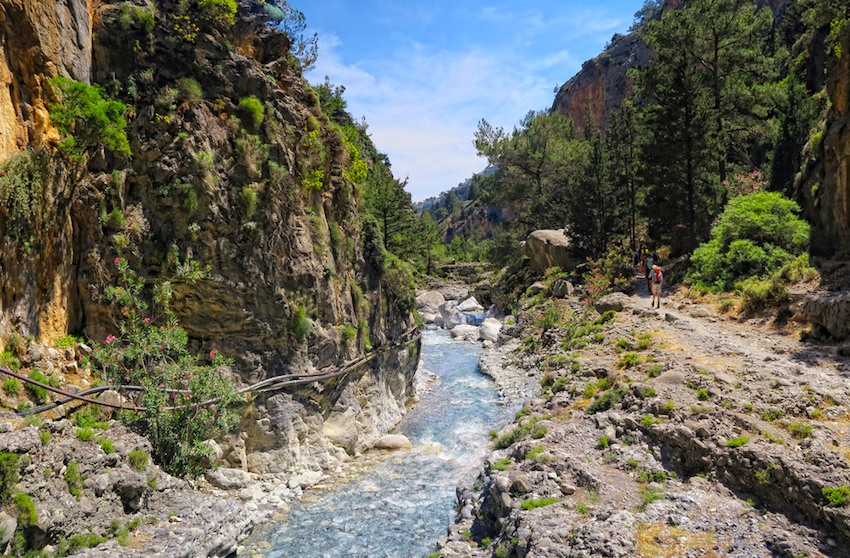
To go to Crete
without going through the Samaria Gorge would be a
missed opportunity for an incredible
experience, providing you are physically
strong enough to walk downhill for 15
kilometers. This part of the trip to Crete
should be done before renting a car unless you
are prepared to walk 15 kilometers back uphill
to retrieve it. There are buses from Chania to
Omalos and to give yourself plenty of time I
suggest taking the first one. When you get to
Omalos find the Xiloskala, or Wooden Staircase
and begin your journey down. Eventually you
reach a stream and begin your trek towards the
sea, passing on your way the deserted village
of Sammaria and a variety of wildflowers and
terrains. The gorge ends at the village of
Agia Roumeli where there are restaurants,
cafes and a boat that will take you to Chora
Sfakion where you can find a room and spend
the night or catch a bus back to Chania or
Rethymnon. There are also less frequent boats
from Agia Roumeli to Souyia and Paleo
Hora. You can also arrange a taxi from Heraklion or arrange a taxi from Chania to drop you off at the top and pick you up in Sfakion or Paliohora.
|
|
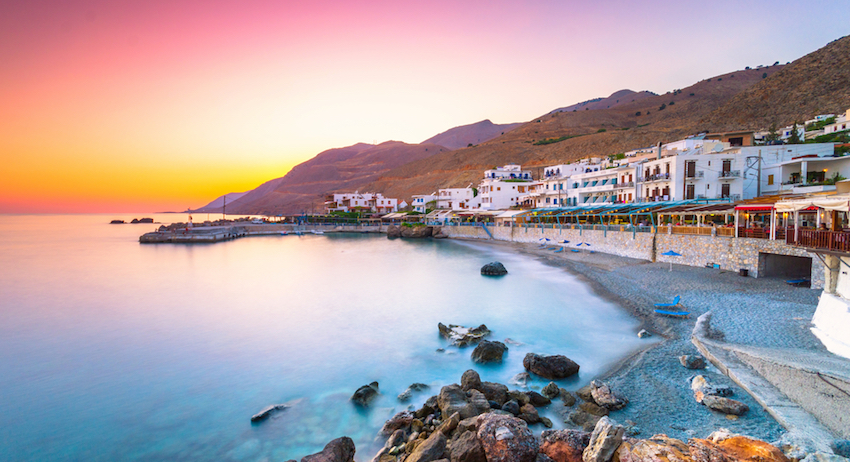
Hora Sfakion
|
|
It is the general
consensus that Chora Sfakion is the best place
to stay on the southern coast of Crete. In the
summer there are plenty of tourists here, that
is to say if you are looking for a place where
you will be one of a handful of foreigners
then you won't find it here. But the town has
retained it's Greek character and most of the
foreigners who go there and promote it have
helped to keep it that way. There are good
restaurants with authentic Greek and Cretan
food and a balance of tourist activities to go
with the traditional activities. The area
around Chora Sfakion is some of the most
beautiful in Crete due to the inaccessibility
of the area in the past. Now getting here is
easy and fun. Search Hora Sfakion Hotels. |
|
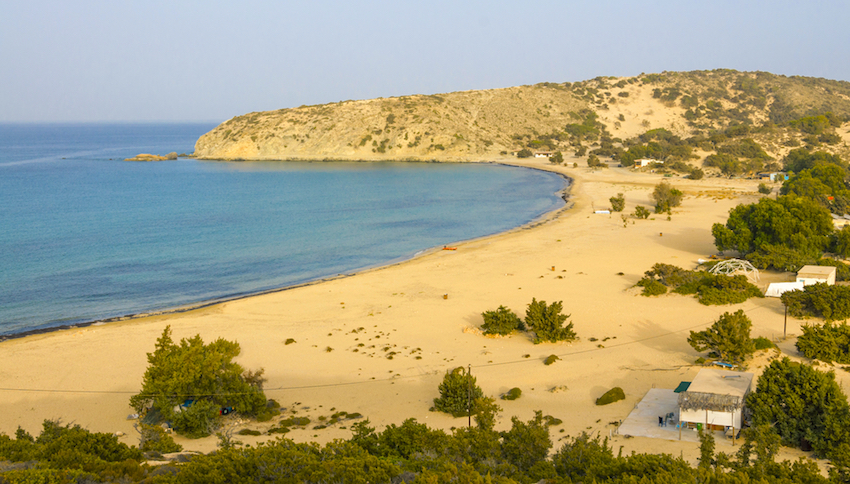
Sarakiniko Beach, Gavdos Island
|
|
The island of
Gavdos off the coast of Paleochora is your
best bet for escaping the throngs during the
summer months. This does not mean you will be
alone there, but chances are anyone you see
will be a lot like you. There is something
funny about an island full of people seeking
solitude. There is not much there besides a
few beaches, tavernas and rooms and it's
inaccessibility makes it unlikely to be
developed. There are rooms for rent which can
be arranged from Paleochora and even Booking.com has a Gavdos page.
There is lots more info on the Gorge and Sfakiaon my Sfakia Page.
|
Plakias,
Agia Galini and Matala
|
|
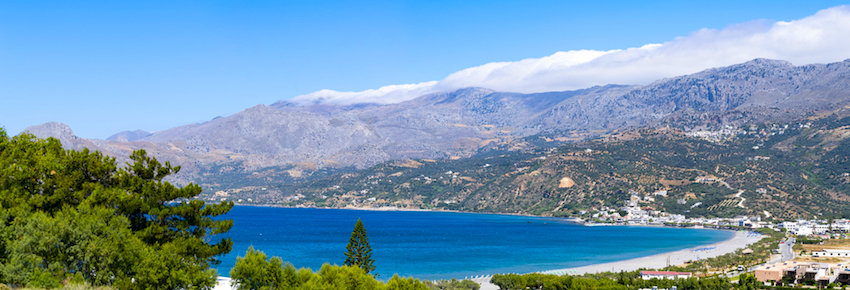
Plakias
|
|
These coastal villages have a lot in common. At
one time they were remote villages with
beautiful beaches, inexpensive rooms and small
tavernas. Now they are built up with hotels,
tour buses arriving by the minute, tourist
shops and wild nightlife. But this is the case
with lots of places in Greece and particularly
Crete and if you are here in the summer you
may as well enjoy it. Anyway we are not all
traveling monks and recluses looking for olive
groves on empty beaches where we can
contemplate the success and failures of our
lives. Some of us like to party at night and
lay out on the beach and watch girls and guys
in their bathing suits by day and these
beaches are perfectly suitable. Plakias is 2
kilometers of tanned (and often lobster red),
young,(and old) bodies. |
|
Matala
|
|
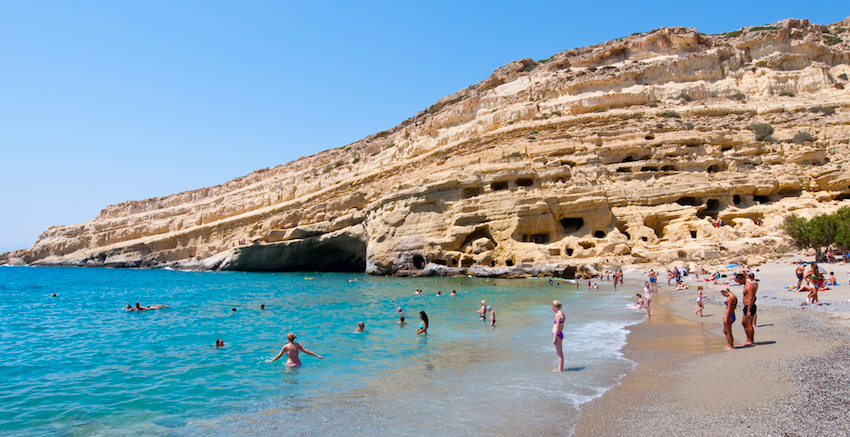
Matala is a coved
beach with the hippy caves made famous by life
magazine in the late sixties and thus changed
forever. In the winter of 1973 I stayed in
these caves until one day we were awakened by
policemen led by priests who evicted us
because they are actually mausoleums. In fact
several of the caves had skeletons in the
carved out beds we were sleeping in. |
|
Agia Galini
|
|
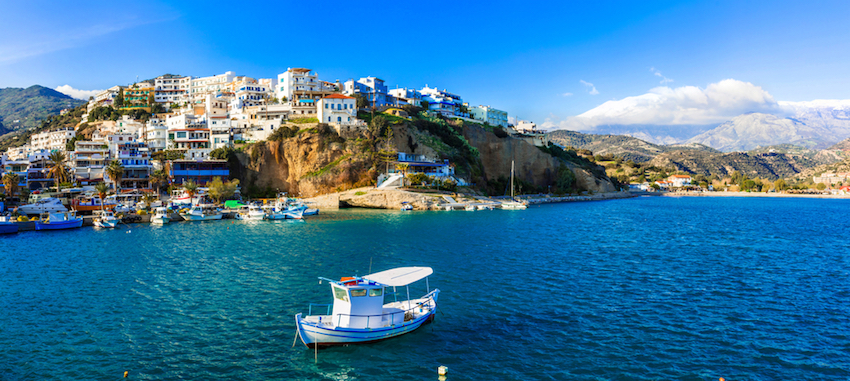
Agia
Galini is a full blown tourist resort however
there are three good reasons to
recommend going there. The sun is usually
shining there, the people are nice, and I
can't remember the third. That being said, any
of these places is fine during the off-season
and being the southernmost part of Greece,
they can be a little warmer in the winter. In
fact I swam on New Years day in Matala in
1974. When I emerged from the water, Germans
dressed in winter overcoats, scarves and hats
gathered around to have their picture taken
with
me. In the summer these southern beach towns are busy with tourists and with Cretans on holiday but if you book early you can find pretty much whatever you want. They all have seafood restaurants, waterfront cafes, tourist shops and hotels, apartments and villas which you can find by searching Crete hotels and typing in the name of the town.
|
Agios
Nikolaos and Elounda
|
|
Agios Nikolaos
|
|
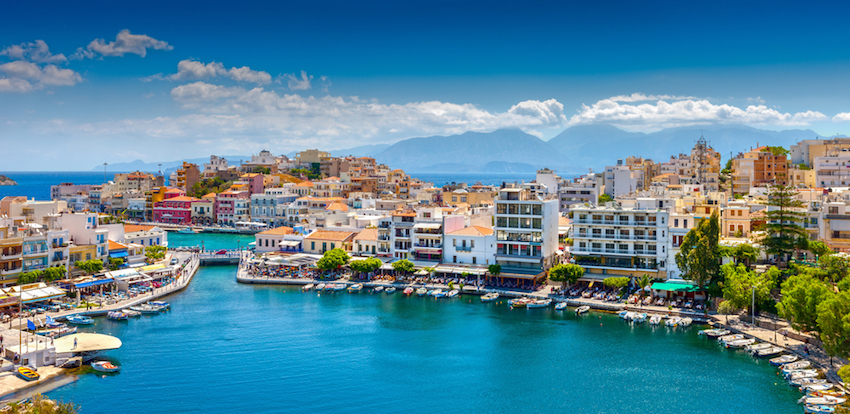
The town center of
Agios Nikolaos is a bottomless lake, which is
actually not a lake because it is connected to
the sea and is not bottomless because it does
not go all the way to the other side of the
earth. But it is deep enough for the
retreating Germans to dump all their tanks
during WW2, and nobody has seen them since.
Now the descendants of those same Germans can
frolic in the sea and in the pubs with the
descendants of the British people they fought,
while being served by the descendants of the
farmers who defended their land with muskets
against those tanks at the bottom of the
bottomless lake. Indeed ‘Ag Nik' as the
British tourists call it, is an interesting
town, somewhat less so in the summer when it
is so packed with tourists that the local
buses can barely get through the streets. But in the last few years it has become more of a place for couples and families and the lager-louts have moved on to who knows where? Maybe Tunisia. Search Hotels in Agios Nikoloas.
|
|
Elounda Beach Hotel and Villas
|
|
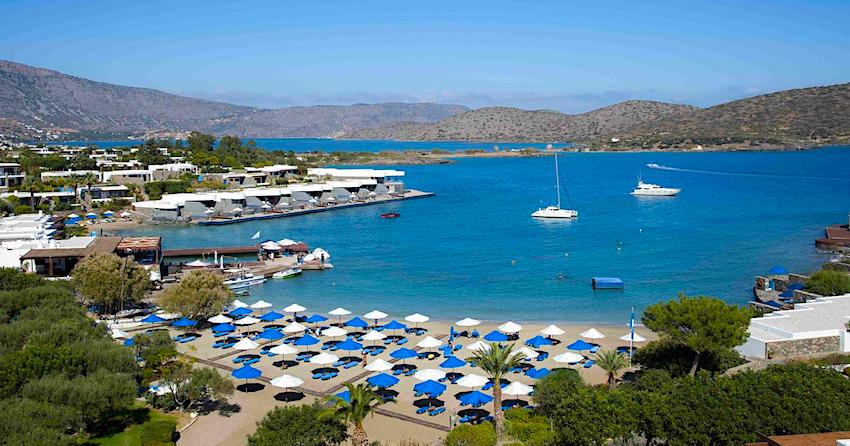
Nearby is the Elounda Beach Resort Hotel, one of the most
well known and successful resorts in the
country and from what I have been told is notbad as resorts go. The hotel includes villas, apartments, suites, restaurants, shops and a private beach just outside of the coastal town of Elounda, which also has lots of hotels. See Elounda Hotels. There are enough sandy
coves and beaches along the coast so you can
get away from the crowds if you want though
you probably won't find solitude unless you
head inland.
When people tell you that Crete has changed this is what they mean. Coastal fishing villages now have miles of hotels, restaurants, cafes and bars but if that is what you have come to Greece for then it is not a problem. If you did not come to Greece to see tourists then I don't know what to tell you except to come to this part of Crete in the off-season or if you are here in the summer head for the hills. See also Agios Nikolaos by Richard Clark (Not that Richard Clark) and Elounda by Julie Ryan.
|
Walk With Donkeys!
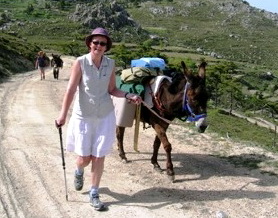 30 minutes south of Agios Nikolaos and 15 minutes from Irepetra is the Walk With Donkeys Farm. Its a sort of old age home for donkeys who have gotten too old to be useful as work animals or whose owners did not need them anymore. They have given the donkeys a home in return for some lighter labor, like
walks in the forest
carrying children instead of bags of cement and bricks. They have a large family of happy donkeys and offer a number of different walks for children and adults or you can just come and visit them. When I was a child and my father told us we were moving to Greece and my brothers and sister were skeptical he promised that he would buy us a donkey. It worked and though he never did get us a donkey we ended up being quite happy in Greece. If you are coming to Greece with your children a trip to the donkey farm might
be just the carrot you need. For more information you can e-mail them at alistair@walkwithdonkeys.com or visit their website at www.walkwithdonkeys.com 30 minutes south of Agios Nikolaos and 15 minutes from Irepetra is the Walk With Donkeys Farm. Its a sort of old age home for donkeys who have gotten too old to be useful as work animals or whose owners did not need them anymore. They have given the donkeys a home in return for some lighter labor, like
walks in the forest
carrying children instead of bags of cement and bricks. They have a large family of happy donkeys and offer a number of different walks for children and adults or you can just come and visit them. When I was a child and my father told us we were moving to Greece and my brothers and sister were skeptical he promised that he would buy us a donkey. It worked and though he never did get us a donkey we ended up being quite happy in Greece. If you are coming to Greece with your children a trip to the donkey farm might
be just the carrot you need. For more information you can e-mail them at alistair@walkwithdonkeys.com or visit their website at www.walkwithdonkeys.com
|
 |
|
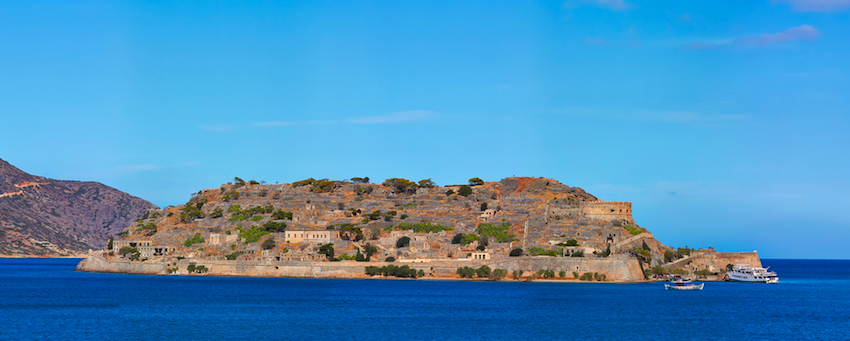
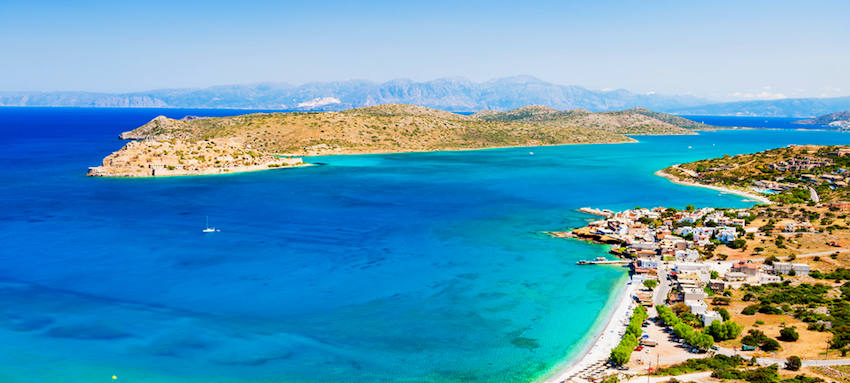
The island of Spinalonga near Elounda was not always an island. The Venetians cut through the isthmus that connected it to the rest of Crete to make the fortress more impregnable in 1526. It was the last Venetian fortress to be captured by the Turks in 1715 and it was the last refuge of the Turks during the Cretan revolt of 1878. From 1903 to 1957 it was a leper colony, one of the last in Europe. (My wife's aunt worked there). Now deserted it is a popular
tourist attraction and people come for the day on excursion boats from Plaka, Elounda and Agios Nikolaos to swim on several beaches on the island.
|
Malia
|
 |
|
Between Agios
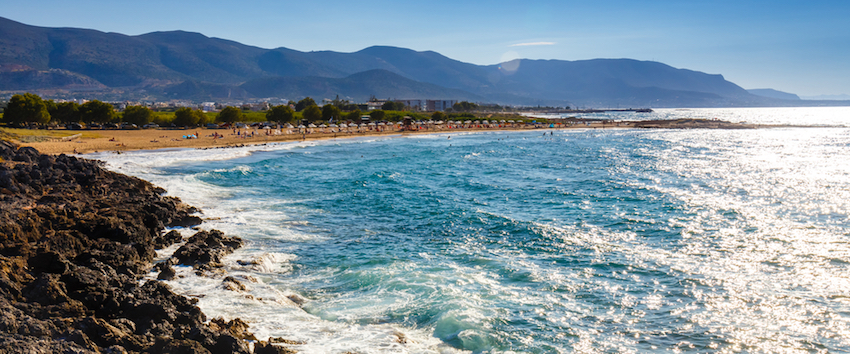
Nikolaos and Iraklion is the famous Malia
which represents everything I dislike about
the tourist industry in Greece. Once a small
coastal village with an interesting Minoan
archeological site, it is now an overwhelming, chaotic collection of tourist shops,
supermarkets, fast food restaurants, moped
rental and travel agencies where you can't
walk down the street without being accosted by
someone trying to get your attention so they
can drag you into their restaurant. The once
quiet beach is now packed with tourists who
could not give a damn where they are as long
as it is sunny and there is a beach and a pub
nearby. There are plenty of pubs. Discos too,
and they compete with each other by playing
their music loudly to draw customers in. You
have to wonder how anyone gets any sleep, but
generally these people did not come for sleep.
Nor did they come for Greece. They come
because someone told them to come or because
everyone else does, and the package tours rake
in the pounds and shillings. Unfortunately
this is what many of the coastal towns in
Crete aspire to and even as far as Palekastro
farmers have begun planting apartment
buildings in their fields for the anticipated
hordes. But before anyone accuses me of being
unsympathetic to the needs of the people of
Malia to make a living (well, get rich
actually), or for the common people to have a
place where they can go and spend their
holidays unhindered by local culture and
customs I have to admit that Malia does serve
a purpose, much in the same way that prisons
do by getting hoodlums off the streets.
Working class people with simple needs should
have a place in Greece to call their own. Not
everybody cares about tradition or is
enamoured with the culture of Crete. Some
people just want to get hot, wet and drunk.
They want to go to a foreign land that is not
too foreign and they want it to be cheap.
Places like Malia are perfect for them, but if
you are reading this it probably is not for
you. Then again you may love it. Greece is funny that way. One person's heaven can be another's hell. You can also find people and places you love in a town that you hated at first sight. Search Hotels in Malia. |
Heraklion
|
 |
|
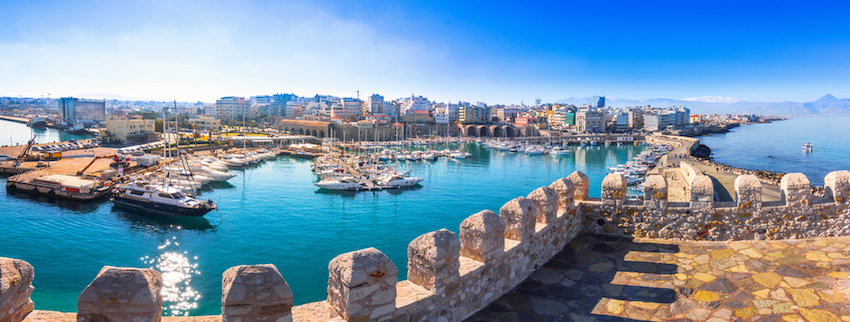
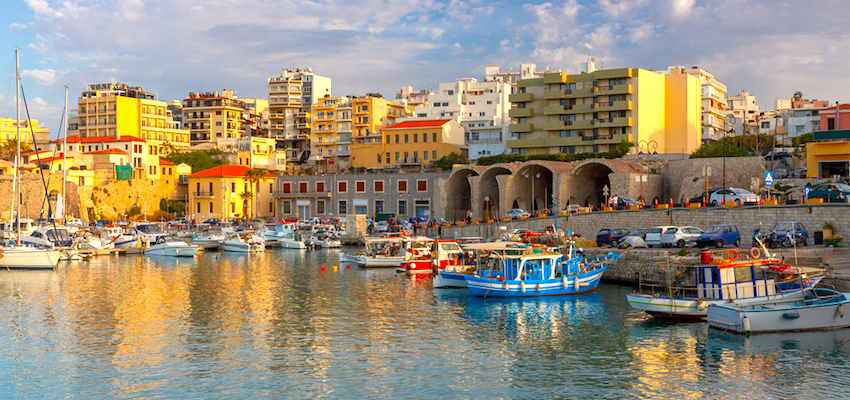
Heraklion is
Crete's main city and has a population of over
120,000. Most people arrive here and base
themselves in one of the hotels within or on
the outskirts of the city. There is an
international airport and an enormous harbor
full of ferries and cruise ships and the
Palace of Knossos is one of the few places
that visitors to Crete have ever really heard
of if they were paying attention in ancient
history class. The city is built on the side
of a hill overlooking the port and it's a
climb to the center of town with a fully
loaded backpack and worse if your suitcase does not have wheels. Mercifully there are taxis
below and the bus station is also in the port
area where you can leave your bags and wander
around in the town above until you know where
you are going.
|
 |
|
Like most cities
there are local buses, traffic lights, plenty
of cars and trucks, hotels, shops,
restaurants, fast food and a terrific central
market in the center of town. The square of
Elefteriou Venizelou is a pedestrian area full
of cafes and restaurants and if you wander
through the tiny back streets that are mostly
closed to automobile traffic you will come
across some interesting shops. In the restored
Venetian church of Agios Markos they hold
concerts in the summertime. The
archeological museum is the best on Crete and
contains Minoan relics from all over the
island. There is a huge fortress in the harbor
built by Venetians that protected the town
from invasion. Throughout the city there are
examples of Venetian architecture and it
is a pleasure to explore, especially in the
off-season when the temperatures are cooler
and they crowds have dwindled.
Keep in mind if you are coming here in the summer that Iraklion is not a quaint little island town. It is a city. With traffic and blaring horns and concrete. You may be happier staying on the beach outside of town. Or if the only reason you are staying in Iraklion is to visit Knossos, which will take you all of two hours, you may be happier staying in Chania or Rethymnon and visiting Iraklion on a day trip or on your way to or from the ferry or the airport. For those planning to combine
Crete and Santorini the schedules change every year but usually the only daily connection to Santorini is from Iraklion and only in the summer.
You can Search Heraklion Hotels and use the map to find somewhere on the beach nearby if your idea of a summer holiday is not staying in the middle of a busy city.
See Diane Farr Louis' Guide to Heraklion
|
Knossos:
Ancient Minoan Crete
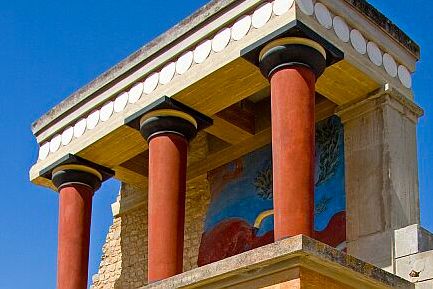 The Palace of
Knossos, discovered by Sir Arthur Evans in 1894, is a few kilometers south of Iraklion and easily accessible by bus or taxi, but
should be seen as early as possible in the summer, or visited in the
off-season. The ruins are extensive and
fascinating and should be enjoyed at a time
when you are not suffering from the heat or
trampled by the crowds since it is one of the busiest sites in Greece and the single most important reason that tourists come to Iraklion, if not all of Crete. Among the ruins,
beautiful frescos and giant pithoi are the
remains of the world's first flush
toilet.
Knossos is one of the few archaeological sites that has been restored in the Art Deco and Art Nouveau style due to the restoration of the frescoes by Piet de Jong. In many guidebooks de Jong's restoration work is said to be "not without controversy" but few mention what that controversy is. The restoration of the frescoes brought to light the question of how much is a true representation of the ancient artist (sculpturer, architect etc) and how much is the imagination of the person doing the
restoration and his culture and age. When ancient sites, frescoes and art that are in scattered fragments are reassembled, there is plenty of room for personal interpretation based on how much remains of the original work. Archaeology is a new and evolving science and it may take awhile before they get it totally right and people are still wrestling with this question. Regardless, Knossos is certainly worth a visit, in fact if you visit Crete without going there your friends who have gone to Crete may
look at you strangely. See my Guide to Knossos The Palace of
Knossos, discovered by Sir Arthur Evans in 1894, is a few kilometers south of Iraklion and easily accessible by bus or taxi, but
should be seen as early as possible in the summer, or visited in the
off-season. The ruins are extensive and
fascinating and should be enjoyed at a time
when you are not suffering from the heat or
trampled by the crowds since it is one of the busiest sites in Greece and the single most important reason that tourists come to Iraklion, if not all of Crete. Among the ruins,
beautiful frescos and giant pithoi are the
remains of the world's first flush
toilet.
Knossos is one of the few archaeological sites that has been restored in the Art Deco and Art Nouveau style due to the restoration of the frescoes by Piet de Jong. In many guidebooks de Jong's restoration work is said to be "not without controversy" but few mention what that controversy is. The restoration of the frescoes brought to light the question of how much is a true representation of the ancient artist (sculpturer, architect etc) and how much is the imagination of the person doing the
restoration and his culture and age. When ancient sites, frescoes and art that are in scattered fragments are reassembled, there is plenty of room for personal interpretation based on how much remains of the original work. Archaeology is a new and evolving science and it may take awhile before they get it totally right and people are still wrestling with this question. Regardless, Knossos is certainly worth a visit, in fact if you visit Crete without going there your friends who have gone to Crete may
look at you strangely. See my Guide to Knossos
|
Nikos
Kazantzakis: Greece's Greatest Modern
Writer
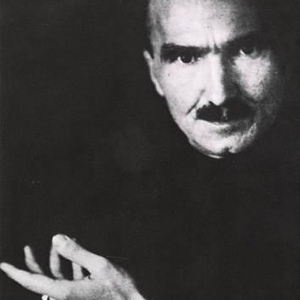 A very special
place for me is the grave of the writer Nikos
Kazantzakis who wrote among other things Zorba
the Greek, The Last temptation of Christ,
Freedom or Death, Report to Greco and the
Modern Sequel to the Odyssey. He has also written numerous travel books and philosophical works. Colin Wilson wrote that if Kazantzakis were Russian he would be considered one of the world's greatest writers. Well he wrote that in the early sixties when few people knew of him and since then Kazantzakis has become one of the world's greatest writers by the millions of people who have read his books in translation. If you have not
read it already, Zorba makes wonderful
complimentary reading for your visit to Crete.
Kazantzakis grave is on the south wall of the
city. A very special
place for me is the grave of the writer Nikos
Kazantzakis who wrote among other things Zorba
the Greek, The Last temptation of Christ,
Freedom or Death, Report to Greco and the
Modern Sequel to the Odyssey. He has also written numerous travel books and philosophical works. Colin Wilson wrote that if Kazantzakis were Russian he would be considered one of the world's greatest writers. Well he wrote that in the early sixties when few people knew of him and since then Kazantzakis has become one of the world's greatest writers by the millions of people who have read his books in translation. If you have not
read it already, Zorba makes wonderful
complimentary reading for your visit to Crete.
Kazantzakis grave is on the south wall of the
city.
His epitaph is
"I hope for
nothing, I fear nothing, I am
free"
Though a national hero, Kazantzakis was excommunicated by the Greek church which is why his grave is on the wall and not in a cemetery. |
Sitia
and Eastern Crete
|
|
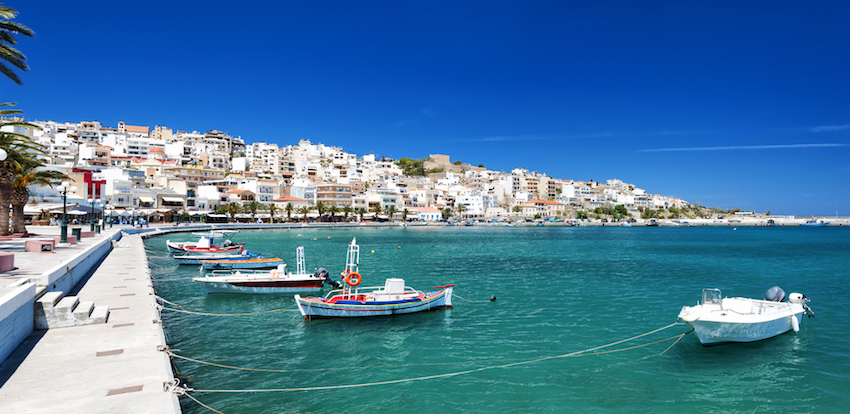
Sitia
|
|
The main road that
runs between Agia Nikolaos and Sitia is one of
the most dramatic in Crete, winding through
olive groves on the steep sides of mountains
where around every bend is a spectacular view.
Sitia with a population of 8500 people, is the
easternmost city on Crete and perhaps the
least developed. Sitia has been
inhabited since the Minoan period. At Petra,
to the east of the town, a section of ancient
settlement has been excavated. There is a
waterfront with restaurants and cafes, a large
public beach, and an archeological museum
which holds many of the findings from
Palekastro. Above the city is a Venetian
castle where they have concerts, in fact we
were lucky enough to see Ross Daley, an
Irishman who single-handedly has popularized
traditional Cretan music, on one of his rare
visits to the far end of the island. There is
a weekly boat that goes to Karpathos and
Rhodes and returns to stop in Santorini, Ios,
Sikinos, Folegandros, Milos and Sifnos before
going back to Pireaus in case you are
interested in a long and scenic return (If it still stops here).
|
|
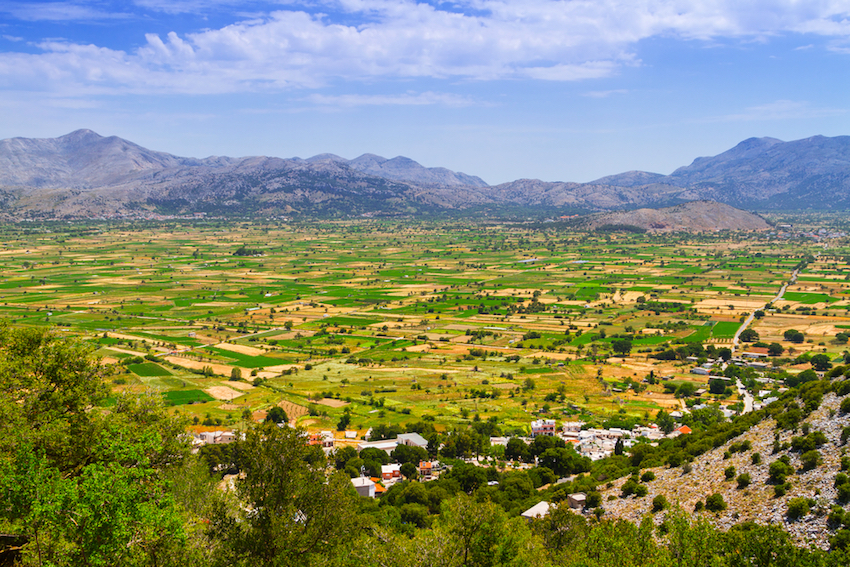
Valley of the Windmills
|
| The Lasithi Plateau is famous for its windmills, used for irrigation, which once numbered around 10,000. Today there are only abiout 5000 still standing and most of them are not working so it is not as impressive as it was when I visited in 1970. But it is till beautiful and worth going to. |
|
 In the small mountain town of Agios Stefanos above the coastal town of Makriyialos, a unique place worth visiting is the Sasteria Observatory run by Belgian astronomist Filip Feys and his
artist partner
Chantel Debrabande. With Astronomy and Art Workshops in the day and star and planet-gazing at night through 4 state-of-the-art telescopes in the clear southern Crete skies they even organize nature walks in the surrounding hills and mountains every Wednesday. Every Sunday, the artistic activities are combined with a Cretan inspired
lunch in the villages of Agios Stéfanos. At night you will see the sky as never before and even be able to take photos. In the day you can see aspects of the sun you never knew existed. For those who are staying in Ag Nikolaos or Ierapetra a trip to the observatory is a wonderful diversion from the typical holiday activities. In the small mountain town of Agios Stefanos above the coastal town of Makriyialos, a unique place worth visiting is the Sasteria Observatory run by Belgian astronomist Filip Feys and his
artist partner
Chantel Debrabande. With Astronomy and Art Workshops in the day and star and planet-gazing at night through 4 state-of-the-art telescopes in the clear southern Crete skies they even organize nature walks in the surrounding hills and mountains every Wednesday. Every Sunday, the artistic activities are combined with a Cretan inspired
lunch in the villages of Agios Stéfanos. At night you will see the sky as never before and even be able to take photos. In the day you can see aspects of the sun you never knew existed. For those who are staying in Ag Nikolaos or Ierapetra a trip to the observatory is a wonderful diversion from the typical holiday activities.
|
Paleokastro
and Vai
|
|
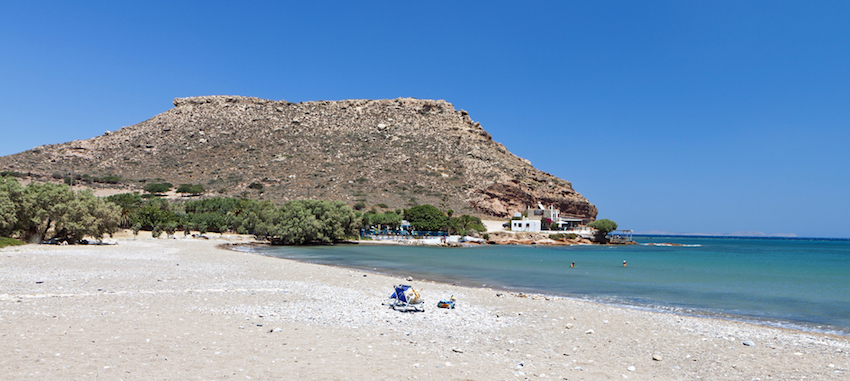
Paleokastro
|
|
The town of
Paleokastro or PK as the archeologists
call it, is an agricultural town which has
opened it's arms to embrace the mass tourism
which has not quite arrived yet. There are
plenty of working class tavernas in the
central part of town and plenty of working
class people to fill them at night. The town
is slowly being built up as apartment
buildings and hotels have sprung from the
ruins of the traditional stone family
dwellings which have been allowed to collapse
in favor of commerce. Still it's not a bad
place to stay. There are some nice beaches,
miles of olive groves, hills and mountains and
a wind that while some might call it
maddening, I found it entertaining as it made
it's way through every crack and orifice in
our hotel to create a symphony of whistles and
banging. There are a couple nice tavernas by
the old customs house on the beach and there
you can find many of the archeologists from
the Minoan site nearby, mostly Americans and
British.
Search Hotels in Paleokastro |
|
Vai Beach
|
|
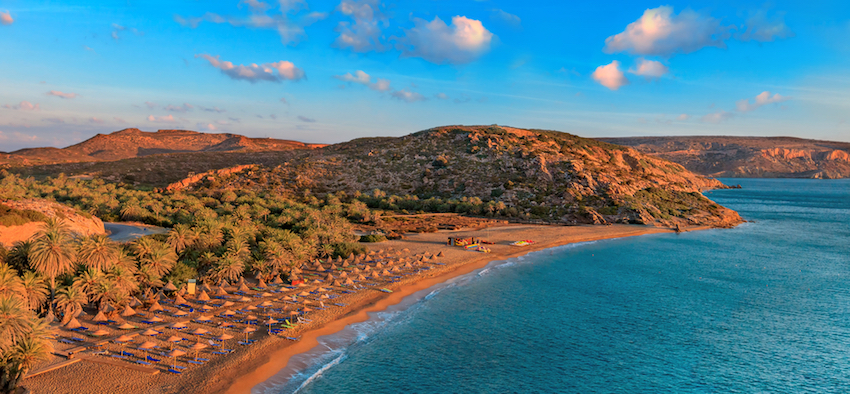
The beach at Vai
is very commercial with tour buses from all
over the island, fast food, tavernas and corn
on the cob sold in the massive parking lot.
But Vai deserves the attention. Not only is it
one of the nicest beaches in Greece, but it is
also the only natural palm tree forest in
Europe. Or at least that is what the guidebooks said and I had no reason to disbelieve them until I got an e-mail from Raul who told me that his town of Elche in Spain has over half a million palm trees! They have also won a world Heritage pride because of their palm tree forests. So that just goes to show you that you can't trust everything you read in a guidebook. So let's just say that Vai is the only palm tree forest in Southeastern Europe. There are also a couple huge pelicans
that wander around terrorizing sunbathers by
jumping on their backs as they sleep or
sunbathe in the rented beach chairs.
|
|
Itanos
|
|
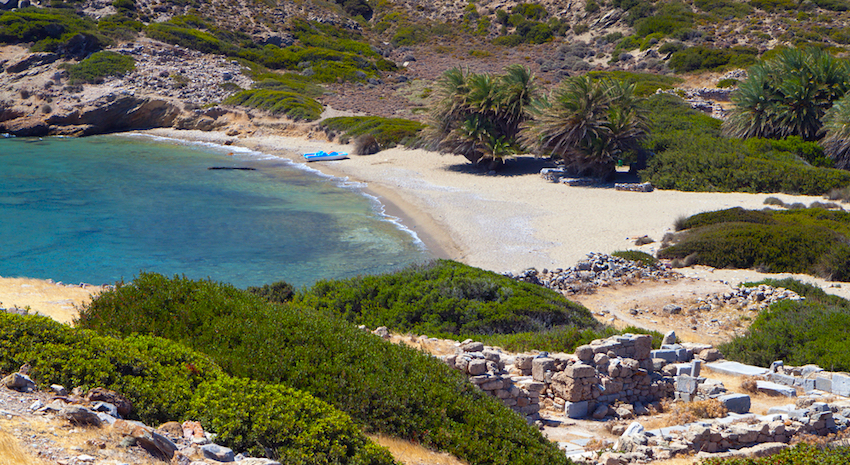
Further north are
the small beaches of Itanos where there
are some classical ruins and a retired
professor who lives in a hut and entertains
dignitaries with grilled fish and raki. The
day we were there we just missed Constantine
Mitsotakis, the former Prime Minister.
|
 |
|
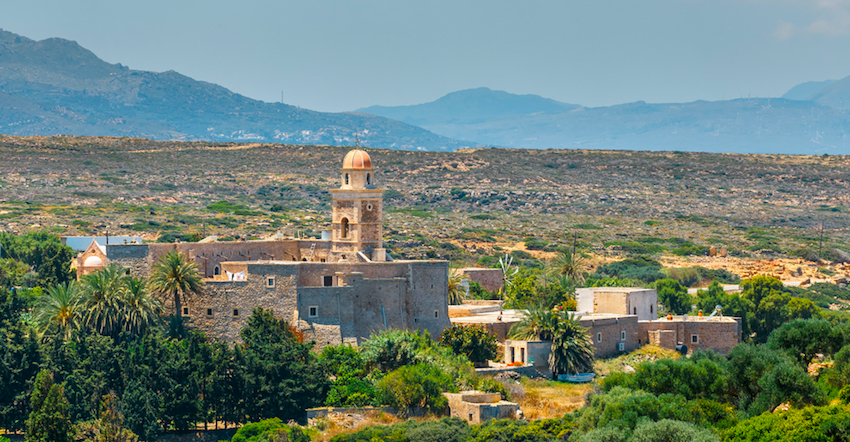
Nearby is
the
Toplou
Monastery
with it's high
walls and beautiful gardens, worth a visit,
especially if you are interested in Byzantine
icons. The icon of The Theotokos the
Immaculate is one of the most holy in all of
Greece and some of the works of the well known
iconographer Ioannis Kornaros are on display.
The monastery also took part in the uprising
of 1866 and in the resistance against the
German occupation when a wireless transmitter
was placed here.
|
|
Kato Zakro
|
|
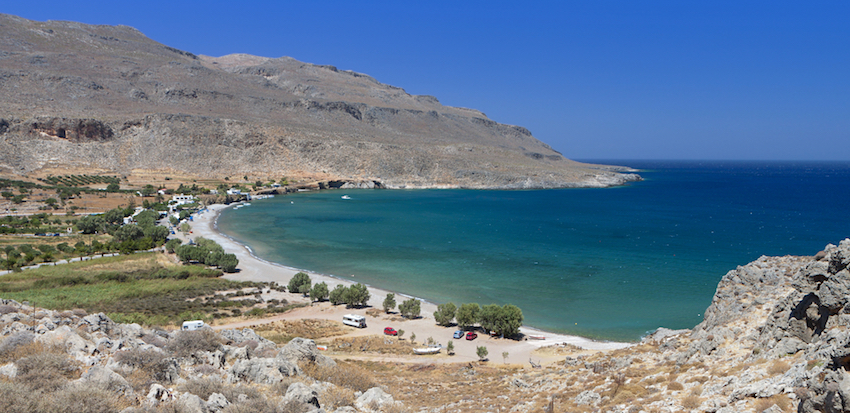
The eastern most
tip of Crete, the beach town of Kato Zakro is
at the bottom of an enormous gorge and the
journey from upper Zakro will test your
courage while it amazes you. The mountain road
is suspended above the sea and as exciting as
the ride is, the village is a welcome sight.
The gorge is known as the ‘Valley of the Dead'
and contains ancient tombs and an impressive
Minoan site. There are tavernas along the
beach with fresh fish and there are rooms to
rent though they can get scarce in the mid
summer. Beyond Zakro the pavement ends but if
you are adventurous don't let that stop you.
There are some amazing secluded beaches and
tiny isolated tavernas that you can have all
to yourself where the food is inexpensive and
excellent.
Search Hotels in Zakros
|
 |
|
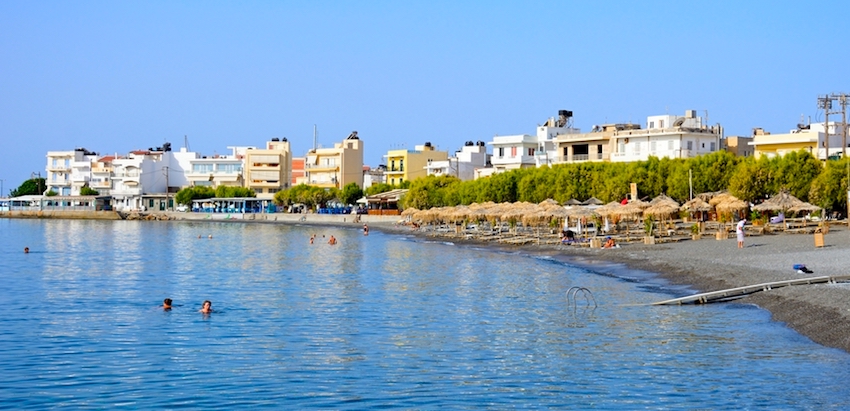
Ierapetra is the southernmost city in Europe depending on whether or not you consider Cyprus as Europe. Even if you do it is close and it is the largest town on the south coast of Crete and if you go any further south you will be in Africa. Ierepetra has been an important town throughout history from Minoan times and Classical Greek and Roman times when it was known as Hierapytna. The Fortress of Kales, built in the early years of Venetian rule and strengthened
by Francesco Morosini in 1626 is a remnant of this period, although local myth says it was built by the Genoese pirate Pescatore in 1212. In 1798 Napoleon stayed with a local family after the Battle of the Pyramids in Egypt. The house where he stayed can still be seen. Ierapetra was chosen among 500 South European destinations by the QualityCoast International Certification Program of EUCC as one of the 50 most attractive tourist destinations for visitors interested in cultural heritage, environment and
sustainability. In 2012 Ierapetra was one of the only three destinations in Greece that won the Gold QualityCoast award, ranking 2nd among the TOP 100 chosen European destinations. There are at least a dozen beautiful beaches within 10 miles of the town as well as right in town. In the movie Zorba the Greek the famous scene in which Anthony Quinn dances the Sirtaki on the beach was shot on Ierapetra Beach. There are restaurants, cafes, shops, hotels and rooms and if you have come this far you should
congratulate yourself. My friend Godfrey Cheshire spent a year here in the seventies and has been dreaming of returning ever since. Search Hotels in Ierepetra
|
|
See also Eastern Crete
|
|
|
The Best Way
to See Crete
Crete is a big
island that can appeal to a variety of people
in different ways. I don't discourage anyone
from going there whether you are a
sun-worshiping party animal or a cultural
minded, eco tourist looking for the land of
Zorba. But if you are the latter my advice is
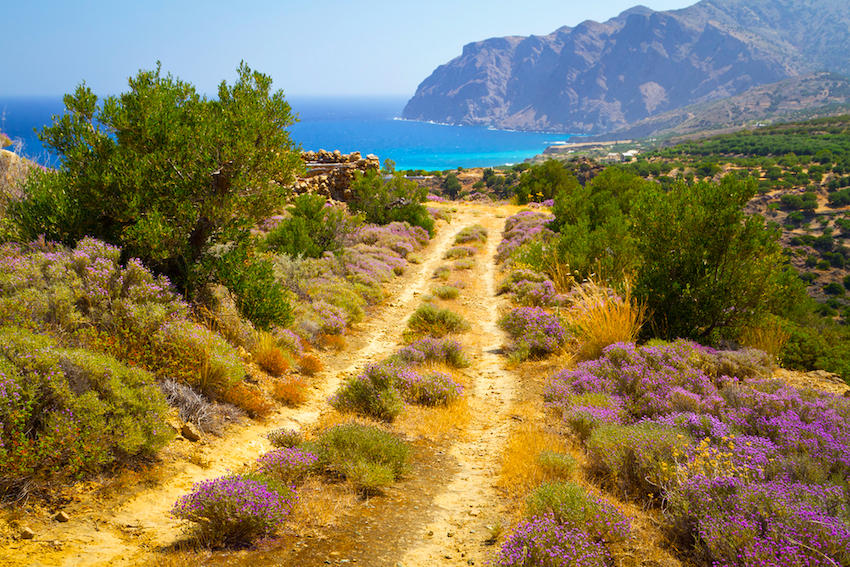
this: Visit Crete in the off-season if possible which means any month but July-August. Base
yourself in Chania for starters and explore
the interior of the island, the mountain
villages and the fields and hillsides which
are alive with wildflowers in the spring. You
will need at least a week here, just exploring the area around Chania. If possible,
book yourself or have your travel agent book
you in different towns around the island. You
can even base yourself in the resort areas
without running with the crowds, if it is near
a part of the island you want to see. There
are several guidebooks for sale on the island
including a guide to the Monasteries which I
recommend. Take your meals at the small
tavernas in villages away from the tourists
and get to know the people who are Crete's
finest asset. The fancy resorts are a modern
phenomenon. Who knows if they are the trend or
will wind up as relics like the ruins at
Knossos? The point is they have been imposed
upon the island by external forces who saw
Crete as a paradise on earth, well worth the
exploitation. I don't condemn this
because the nature of tourism is
commerce and who am I to judge the needs of
the package tourists or the Cretan people who
prosper from the flow of dollars, pounds and
Euros. If sun, sea, beer and
companionship is what you have come to Greece
for then you will find the resorts very
satisfying as some of these giant companies
have created a new Greece, grafting Caribbean
tourist culture with the famous Hellenic
hospitality. But if you are looking for the
magic head for the hills. You'll find the
people where the tourists aren't. As for the
beaches, the island is big and somewhere there
is a secluded little cove with your name on
it. |
 |
Helpful
Services and Information for Crete
|
|
Golf in Crete
Crete is home to a spectacular 18-Hole Golf course! If you have always wanted to visit Greece but your husband won't go on vacation anywhere he can't play golf then come to Crete.
See Crete Golf Club
Lefteris Nikiforakis Taxi Tours of Crete
offers a one day
tour and a 4 hour tour for people arriving on
cruise ships who want to make the most of
their time on the island. He also does custom
trips and transfers to and from the port to
hotels, the airport and anywhere on the
island. This is a great way to see the island if you don't want to rent a car or be with a group of people. If you share the cost between 3 or 4 people it is a bargain if you compare it to the cost of a bus tour. See
www.greecetravel.com/crete/taxitours
Car Rentals
Aegean Thesaurus has car rentals in several towns in Crete. See their website
Dolphin
Hellas Travel
offers individual
hotels to Crete or packages in combination
with Athens or other islands. See their
web-site at
www.greecetravel.com/dolphinhellas
Fantasy
Travel
in Athens is
an excellent agency and they have some
great prices for hotels in Crete as well as
itineraries that combine Crete with other
islands like Santorini, Mykonos, Rhodes and
others. Prompt, efficient and highly recommended. See
www.fantasytravelofgreece.com
Aegean Thesaurus Travel is located in Sifnos but books hotels, tours, ferries, flights, car rentals, transfers, and everything you need to explore Crete. See their website
Hotels in Crete: See the Crete Hotels section for suggested hotels and booking information. You can find hotels, apartments, rooms and even houses through Booking.com's
Crete Pages which also contributes to my website when you book. Also see Matt's Hotels of Greece Crete Page.
Getting to Crete: See the Flights and Ferries to Crete section.
 Use Ferryhopper to find all direct and indirect ferry routes for the islands of Greece, Spain, Italy &
Turkey, compare ferry companies & prices, and book cheap ferry tickets with no hidden fees in one go! Use Ferryhopper to find all direct and indirect ferry routes for the islands of Greece, Spain, Italy &
Turkey, compare ferry companies & prices, and book cheap ferry tickets with no hidden fees in one go!
Crete
– A Notebook by Richard Clark, is a series of snapshots of his experiences on an island he has grown to cherish. It is less of a travel guide and more of a traveling companion. Whether a regular visitor or a first time traveler there, this book provides an invaluable insight into life past and present on this exquisite island. The author is a writer, editor and journalist who has worked on an array of national newspapers and magazines in the UK. He is married with two
grown up children and lives in Kent.
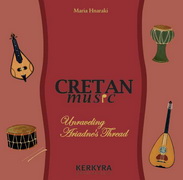 Unraveling Ariadne’s Thread: Cretan Music by Maria Hnaraki, Ph.D.: “Young Academic Writer and Researcher in the Areas of Cretan Culture and Dance” Award by the Pancretan Association of America. "Crete is an island where many people from different countries, cultures
and religions
have lived and have left their traces. So isn’t music in Crete today a product of all these mixtures and cultural elements?" Dr. Hnaraki’s self-posed question is answered in the affirmative as the author takes the reader on a journey of discovery through the five steps -- or five chapters -- of this book, constructed in the spirit of the traditional pendozalis five-step dance. Writing in an intensely personal style, bringing into her narrative gods and heroes from Greek mythology and literature as well
as present-day musicians and performers, Hnaraki succeeds in evoking both the rich history and the vibrant present of Cretan music. Unraveling Ariadne’s Thread: Cretan Music by Maria Hnaraki, Ph.D.: “Young Academic Writer and Researcher in the Areas of Cretan Culture and Dance” Award by the Pancretan Association of America. "Crete is an island where many people from different countries, cultures
and religions
have lived and have left their traces. So isn’t music in Crete today a product of all these mixtures and cultural elements?" Dr. Hnaraki’s self-posed question is answered in the affirmative as the author takes the reader on a journey of discovery through the five steps -- or five chapters -- of this book, constructed in the spirit of the traditional pendozalis five-step dance. Writing in an intensely personal style, bringing into her narrative gods and heroes from Greek mythology and literature as well
as present-day musicians and performers, Hnaraki succeeds in evoking both the rich history and the vibrant present of Cretan music.
The book is written in the English language. It includes notes, list of sources, glossary and suggested discography for readers who wish to study certain topics further. A CD including traditional Cretan songs and dances accompanies the book.
Maria Hnaraki is an artist and a scholar…So here is a work of feeling and thought. Dealing in beauty and tragedy – two things that are undistinguishable in Greek (and Cretan) tradition. You may read it as a treatise or you may enjoy it as a performance. It is both. -Nikos Dimou, writer
You can order this and other books from Greece In
Print by using their form. For more books about Greece see www.greektravel.com/books
|
More Greece Information
|
|
For more information about Greece visit Matt Barrett's Greece Travel Guide
If you have questions about Greece email:
matt@greecetravel.com
If you arrive from abroad and you need to get to Pireaus to catch the ferry to Crete I recommend George the Famous Taxi Driver. Plus if you have some time to spare, as some of you will, you can do a little tour of the city. For your return to Athens from Crete I also recommend using him to get to your hotel or the airport. When the ferries arrive
in Pireaus you will be very happy to see a guy holding up a sign with your name on it. See his web-site at www.greecetravel.com/taxi |
|